
The same incinerator can run clean for ten years or smoke from the first week – the difference is often the operator. Field assessments of small incinerators repeatedly point to insufficient hands-on training. This guide sets out a simple daily procedure you can print and post next to your machine.

Personal Protective Equipment (PPE)
Every operator should wear:
- Helmet and safety goggles or face shield
- Respirator (dust/particle mask as a minimum)
- Heat-resistant gloves and apron
- Long-sleeve clothing
- Heat-resistant safety boots
Need an incinerator for solid waste?
We manufacture solid waste incinerators and recommend a model from your waste type, daily volume, fuel and local emission requirements. Send your details for a quotation.
All IncineratorsRequest a QuoteDaily Operating Procedure
Before Start
- Check that the ash from the last cycle has been removed (only when the chamber is cold).
- Check fuel level, fuel filter and for any leaks.
- Check the power supply, blower and burner.
- Inspect door seals and refractory for cracks.
- Make sure waste is segregated – no glass, batteries or pressurized cans.
Preheating
- Start the secondary chamber burner first and heat it to the set temperature (typically 850°C or above).
- Then start the primary chamber burner.
Loading
- Load waste in batches at the rated capacity – never overload.
- Mix wet and plastic waste with dry waste.
- Close the door fully after each load. Do not open the door while the burner is firing at full power.
Burning and Monitoring
- Watch the temperature display in both chambers.
- Visible black smoke means the temperature is too low or the load is too large – pause loading.
- Do not add waste if the secondary chamber is below the set temperature.
Burn-Down and Shutdown
- After the last load, keep the burners running until all waste is fully burned.
- Let the blower run to cool the chamber according to the manual before switching off.
- Remove ash only after cooling.
Record Keeping
Keep a simple daily log. PATH’s Incinerator Guidebook recommends recording waste received and destroyed, fuel used, defects and service history. Logs help you spot problems early and prove compliance to inspectors.
| Date | Waste burned (kg) | Fuel used (L) | Max temp. 1st / 2nd chamber | Problems noted | Operator |
|---|
Most Common Operator Mistakes
- Loading before the secondary chamber is hot
- Overloading to “finish faster”
- Opening the door during full firing
- Leaving wet waste in the rain
- Skipping weekly cleaning of burner and air inlets
Training We Provide
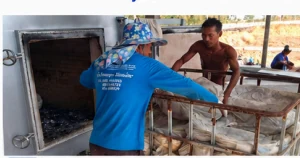
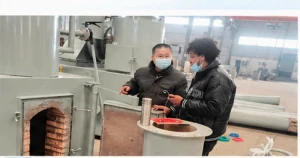
With each incinerator we supply an operation manual and offer training through video calls, at our factory, or on site for project installations. Ask about training options when you request a quote. See also our maintenance checklist.
Ask About Training and Commissioning
Tell us your project location and number of operators – we’ll include training and commissioning options in your quote.
FAQ
How long does it take to train an operator?
Basic operation can be learned in a few days of hands-on practice. We recommend supervised operation for the first weeks and a refresher session after about a year.
Do operators need special qualifications?
No formal qualification is usually required, but operators should be trained in the procedure, safety and record keeping, and some countries require certification for medical waste handling.
Is the operation manual available in other languages?
English is standard; other languages can be discussed for projects. Ask when requesting your quote.
Can the incinerator be operated automatically?
Models with PLC control automate temperature control, burner operation and safety interlocks. Loading may be manual or automatic depending on the model.