
An incinerator destroys waste through controlled high-temperature combustion, reducing it to ash, flue gas and heat. Here is how a typical industrial or garbage incinerator works, step by step.
1. Waste Feeding
Waste is loaded manually through a door (batch units) or by a hydraulic pusher, hopper or screw feeder (continuous units).
2. Primary Combustion Chamber
The waste is dried, heated and burned or gasified. Controlled-air designs supply limited air here so the waste breaks down into combustible gases.
Related: for small units, read how small trash incinerators work. Learn how emissions are controlled in how incinerators control dioxins, or see our industrial incinerators.
3. Secondary Combustion Chamber
Gases from the primary chamber are mixed with air and burned at a higher temperature. Many regulations require a minimum temperature (commonly at least 850°C, and higher for certain wastes) and a gas residence time of about two seconds to destroy organic compounds.
4. Flue Gas Treatment
Hot gas is cooled and cleaned before release through the stack. Typical stages include a quench or heat exchanger, an acid-gas scrubber, activated carbon injection and a bag filter. See emissions control options.
5. Ash Removal
Bottom ash is removed from the primary chamber, and fly ash is collected by the filter. Both must be handled according to local regulations.
6. Control and Monitoring
Temperature sensors, burner controls and safety interlocks keep the process stable. PLC systems can log temperatures and alarms for compliance records.
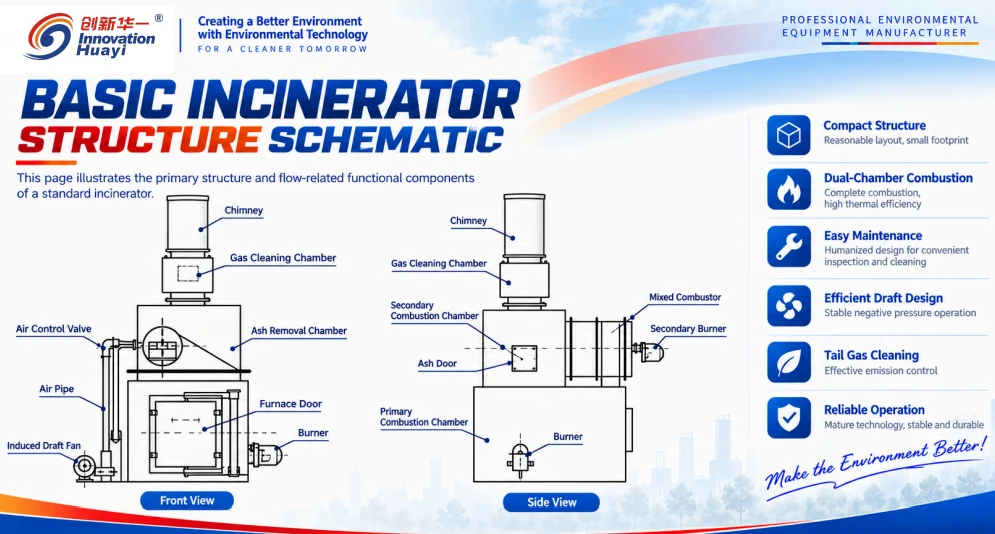
Inside a Huayi Incinerator

- Primary (gasification) chamber: temperature rises gradually from about 200°C to 800°C, reducing clinker, slagging and sintering.
- Mixing combustion chamber: flue gas enters tangentially; a secondary burner and circumferential air supply mix it with air for complete combustion.
- Secondary combustion chamber: residence time over 2 seconds, temperature up to 1,200°C.
- Purification chamber: Ca(OH)₂ filter bricks neutralize acidic gases and adsorb pollutants.


Waste Pyrolysis: How It Works
In an oxygen-limited furnace, organic waste is thermally decomposed into pyrolysis gas, organic liquid, carbon black/char and slag. The pyrolysis gas is then burned in the secondary combustion chamber and passed through flue gas purification.

Main Components at a Glance
| Component | Role |
|---|---|
| Feeding system | Loads waste safely |
| Primary chamber | Burns or gasifies waste |
| Secondary chamber | Destroys combustible gases |
| Burners & fans | Supply heat and air |
| Flue gas treatment | Removes pollutants |
| Stack | Releases cleaned gas |
| Control panel | Monitors and controls operation |
Can You Build a Trash Incinerator Yourself?
Small DIY burn barrels are not incinerators and do not reach the temperatures needed for clean combustion. Open burning is restricted or banned in many areas. For any regular waste treatment, use a purpose-built incinerator that meets local regulations.
Ready to choose a system? Compare incinerator types or read the cost guide.
Get a Quote for This Project
Fill in what you know – our engineer will reply with a model recommendation and quotation, usually within 24 hours.
Inside the Secondary Combustion Chamber
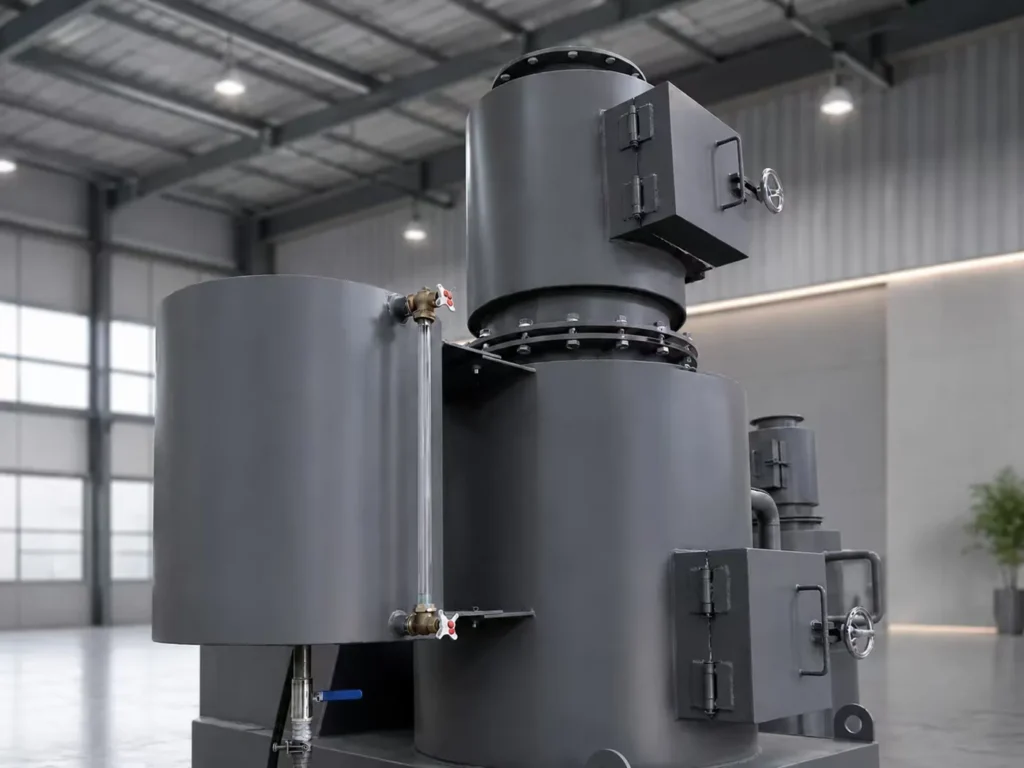
The secondary chamber sits above the primary chamber. Smoke and gases from the burning waste rise into it and are burned again by a second burner, with about two seconds of residence time at high temperature. Inspection doors with screw-locked handwheels allow the chamber to be checked and maintained easily.
Key Design Parameters
- Combustion temperature: the secondary chamber is kept at high temperature to destroy smoke and odors
- Gas residence time: about two seconds in the secondary chamber is a common design target
- Turbulence: good air mixing ensures complete burning
- Excess air control: enough oxygen for complete combustion without cooling the chamber
These are often called the “three Ts” of combustion: temperature, time and turbulence.
From Waste to Ash: What Remains
After incineration, most of the waste volume is gone. What remains is bottom ash from the primary chamber and fine fly ash captured by the flue gas system. Bottom ash is usually inert and much smaller in volume than the original waste. Fly ash may need special handling depending on local rules. Ask your supplier how ash is removed and what your local regulations require.
Choosing the Right Process for Your Waste
Medical, municipal, animal and industrial waste behave differently in the furnace. Wet waste needs more heat, plastics release a lot of energy, and some industrial wastes need special gas treatment. A good manufacturer designs chamber size, burners and gas treatment around your waste. See our industrial incinerators, medical waste incinerators and garbage incinerators.
Get a Quotation for Your Incinerator Project
Tell us your waste type, daily volume and the emission standard you must meet. Our engineers will recommend a model and send a quotation with a technical proposal.