
“How much does a trash incinerator cost?” is the first question most buyers ask – and the honest answer is that two machines with the same capacity can differ in price several times over. This guide explains what drives the price so you can budget accurately and compare quotations fairly.
Looking for equipment? Compare our incinerators for sale or see our garbage incinerators, built and tested in our own factory since 2009. Budgeting for a larger system? See our industrial incinerator cost guide.
1. Capacity
Larger chambers, thicker refractory and bigger burners and fans cost more. Capacity is usually quoted in kg/h or kg per batch – make sure every quotation uses the same unit and the same operating hours.
Need an incinerator for garbage and household waste?
We manufacture garbage and household waste incinerators and recommend a model from your waste type, daily volume, fuel and local emission requirements. Send your details for a quotation.
Garbage IncineratorsRequest a Quote2. Waste Type
Wet food waste, medical waste or waste with high plastic or chlorine content needs a hotter, larger secondary chamber and stronger flue gas treatment than dry paper and packaging.
3. Flue Gas Treatment
This is usually the biggest price variable:
| Treatment level | Typical components | Relative cost |
|---|---|---|
| Dry purification | Purification chamber with Ca(OH)₂ filter bricks | Low |
| Wet purification | Venturi scrubber, packed tower, cyclone, induced draft fan, pump | Medium |
| Multi-stage | Quench tower, deacidification tower, activated carbon, bag filter | High |
4. Feeding and Automation
Manual doors are cheapest. Automatic feeding devices, moving hearths, automatic doors and PLC touch-screen control add cost but reduce labour and improve consistency.


5. Materials and Build Quality
Refractory grade, steel thickness and insulation layers decide service life and outer-wall temperature. A cheaper unit with thin refractory may need relining much sooner.
6. Fuel Type
Diesel, natural gas and LPG burners have different prices – and very different running costs depending on local fuel prices.
7. Shipping and Installation
Freight, crating, site foundation, chimney installation and commissioning should all be listed. Ask whether installation guidance and operator training are included.
8. Stock Availability
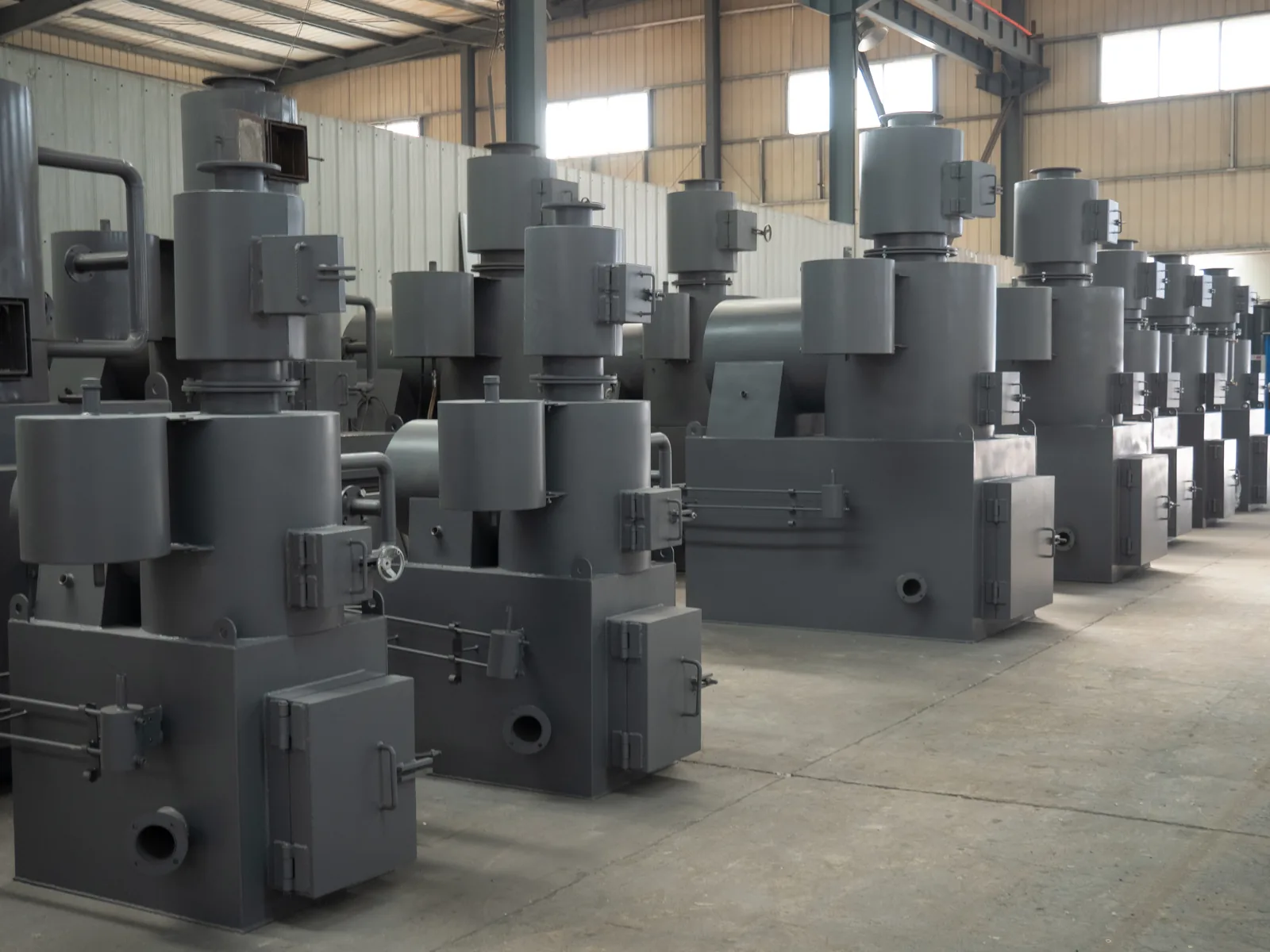
Standard models held in stock can ship quickly; customized systems take longer and may cost more. Ask your supplier which models are currently in their showroom warehouse.
Don’t Forget Running Costs
- Auxiliary fuel consumption per hour
- Electricity for fans and pumps
- Consumables: lime, activated carbon, filter bags, water
- Labour, maintenance and spare parts
- Ash disposal and emission testing
How to Get an Accurate Quote
Send your supplier: waste type, daily volume, operating hours, site location, emission standard, and available fuel and power. With this, a manufacturer can quote a specific model instead of a vague price range.
Why won’t manufacturers list a fixed price online?
Because the flue gas treatment and automation level change the price significantly. A short requirements list lets them quote the right configuration.
Is the cheapest incinerator the best value?
Rarely. Compare residence time, secondary chamber temperature, refractory quality and treatment scope – not only the headline price.
Small vs Large Trash Incinerators: How Price Scales
Price does not grow in a straight line with capacity. A small unit still needs two chambers, burners, a control panel and a chimney, so its cost per kilogram of capacity is higher than a larger unit. As capacity grows, the chambers get bigger but many components stay similar, so the cost per kilogram falls. That is why buyers with growing waste volumes often choose a slightly larger model than they need today.
Budget, Mid-Range and Premium Configurations
- Budget configuration: manual loading, basic control panel, simple chimney without advanced gas treatment; suitable where emission rules are basic
- Mid-range configuration: dual chambers with automatic temperature control, better refractory and a cyclone or dry gas treatment
- Premium configuration: automatic feeding, PLC or touch screen control, wet scrubber or full dry treatment system and continuous emission monitoring options
Choose the configuration your local regulations require; paying for features you do not need wastes budget, while saving on required emission control can stop your project.
Hidden Costs to Plan For
- Concrete foundation and a simple roof or shelter
- Electrical connection and fuel tank
- Shipping, insurance and import duties
- Installation supervision and training
- Spare parts for the first year
- Permits and emission testing if required
Adding these to your budget early avoids surprises. For larger industrial projects, see our industrial incinerator cost guide.
How to Lower the Total Cost
Sort waste to remove non-combustibles, choose the right capacity, use the most economical local fuel and train operators well. Ask your supplier for a quote with clear options so you can compare what each feature adds. Our engineers will recommend a configuration that meets your needs without unnecessary extras.
Get a Real Price for Your Project
Tell us your waste and volume – we’ll reply with model, price and lead time within 24 hours.