
How waste enters the furnace affects labour, fuel use and combustion quality. Here’s how batch and continuous feeding compare.
Looking for equipment? Compare our incinerators for sale or see our industrial waste incinerators, built and tested in our own factory since 2009.
Batch Feeding
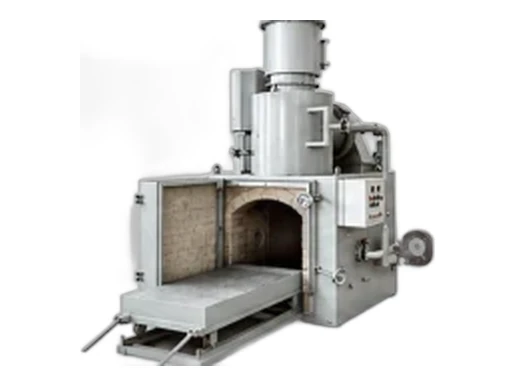
Waste is loaded through the door, the door is closed and the batch burns down before the next load and ash removal.
- Simple and lower cost
- Suits small and medium daily volumes
- Temperature drops each time the door opens
- More operator time per ton

Need an incinerator for solid waste?
We manufacture solid waste incinerators and recommend a model from your waste type, daily volume, fuel and local emission requirements. Send your details for a quotation.
All IncineratorsRequest a QuoteAutomatic / Continuous Feeding
A conveyor, hopper, top-opening feeder or bin-dumping lift loads waste while the unit runs.
- Stable temperature and cleaner combustion
- Less labour and less operator exposure
- Better for large volumes and long shifts
- Higher equipment cost


Comparison
| Batch | Continuous / automatic | |
|---|---|---|
| Typical capacity | Up to a few hundred kg/h | Larger, up to 3–5 t per batch systems |
| Equipment cost | Lower | Higher |
| Labour | Higher | Lower |
| Temperature stability | Fluctuates | Stable |
| Best for | Clinics, farms, camps | Factories, towns, large hospitals |
Middle Ground
Many buyers start with a manual unit and add an automatic feeding device or automatic door later. Ask your supplier whether the model can be upgraded.
Which feeding type is more fuel-efficient?
Continuous feeding usually is, because the chamber stays at temperature instead of reheating after every door opening.
A Simple Rule of Thumb
If you produce waste in small amounts throughout the day and can load it in a few batches, a batch incinerator is usually the most economical choice. If waste arrives continuously in larger volumes and you need to process it over long hours, a continuous feeding system with automatic loading usually works better. The deciding factors are daily volume, labor availability and how steady the waste flow is.
Labor and Automation
Batch systems need an operator to load, monitor and remove ash, which is fine for small operations. Continuous systems use feeding equipment such as hydraulic rams or conveyors to load waste automatically, reducing labor per ton and keeping combustion more stable. Automation adds cost but often pays back through lower labor and fuel use on larger sites.
Fuel Efficiency Differences
Each batch requires heating the chamber, which uses fuel. In continuous operation, the furnace stays hot and the waste itself provides much of the heat, so auxiliary fuel use per ton can be lower. For small volumes, however, a batch unit sized correctly can still be very efficient. See incinerator fuel consumption for more detail.
Which Applications Suit Each Type?
- Batch: clinics, small hospitals, farms, resorts, remote camps
- Continuous: large hospitals, towns, industrial plants, waste collection centers
Not sure which fits? Send us your daily waste volume and operating hours, and our engineers will recommend the right design. Compare our industrial incinerators and garbage incinerators.
Choose the Right Feeding System
Tell us your volume and labour situation – we’ll recommend manual or automatic feeding.