
A trash incinerator is a purpose-built furnace that burns solid waste at controlled high temperatures, turning it into ash, flue gas and heat. Unlike open burning or a burn barrel, a real incinerator uses two combustion chambers, burners and controlled air supply so that waste burns completely and smoke is treated before it leaves the stack.
Looking for equipment? Compare our incinerators for sale or see our garbage incinerators, built and tested in our own factory since 2009. New to the topic? Read how small trash incinerators work and our trash incinerator price guide.
For villages, factories, farms, hospitals and remote camps, an on-site trash incinerator can cut waste volume by around 90%, reduce transport costs and remove the need for a nearby landfill.
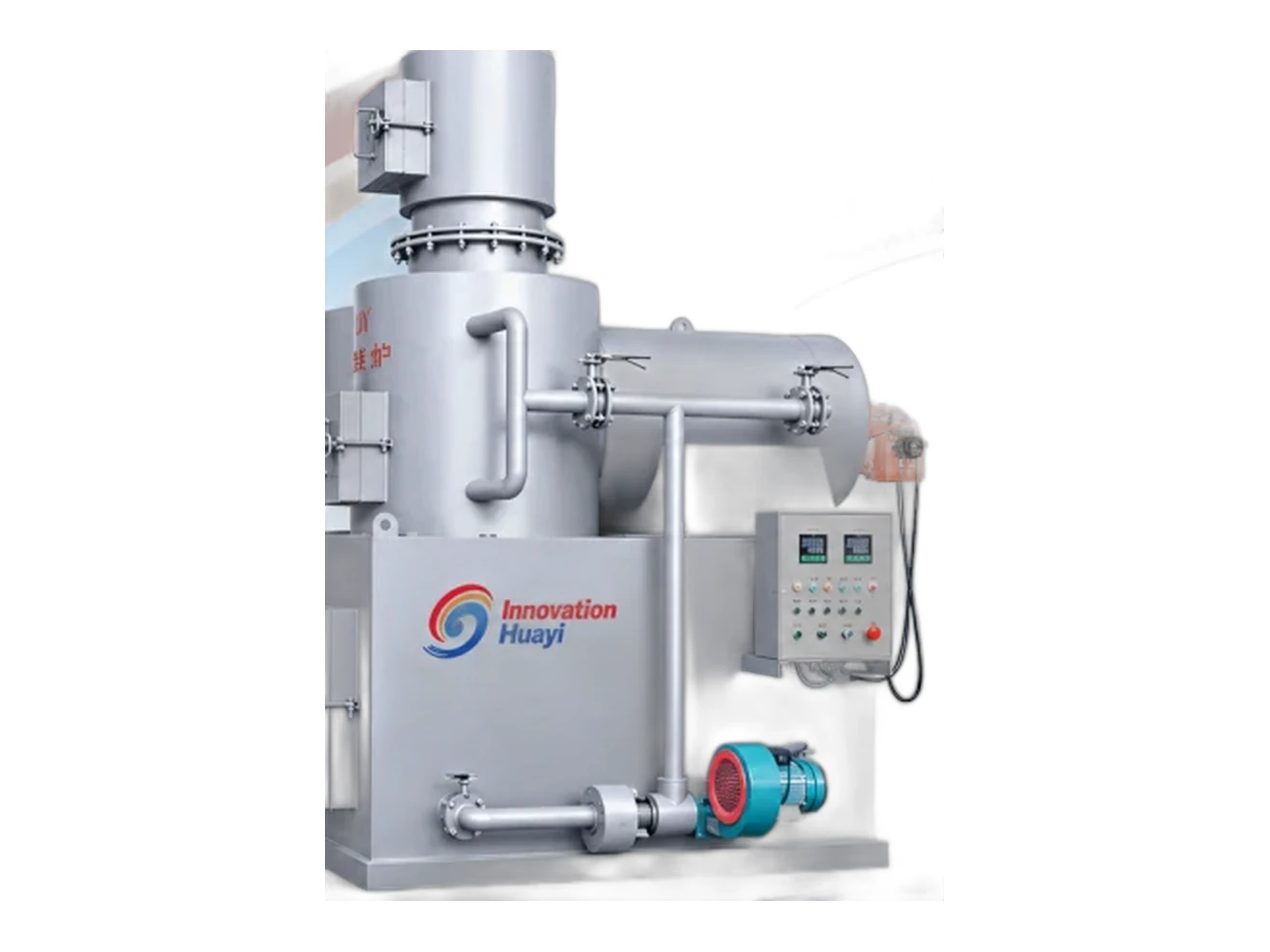
How a Trash Incinerator Differs from Open Burning
- Two chambers: the primary chamber gasifies the waste; the secondary chamber burns the gases at high temperature.
- Burners and fans: diesel, natural gas or LPG burners keep temperatures stable even when waste is wet.
- Residence time: flue gas stays in the hot secondary chamber for about 2 seconds, which destroys smoke, odour and most organic pollutants.
- Flue gas treatment: dry filters or wet scrubbers clean the gas before release.
Open burning reaches none of these conditions, which is why it is banned or restricted in most countries.
Need an incinerator for garbage and household waste?
We manufacture garbage and household waste incinerators and recommend a model from your waste type, daily volume, fuel and local emission requirements. Send your details for a quotation.
Garbage IncineratorsRequest a QuoteMain Types of Trash Incinerators
| Type | Typical capacity | Best for |
|---|---|---|
| Compact batch incinerator | 10–50 kg/h | Clinics, small camps, resorts |
| Basic dual-chamber incinerator | 50–500 kg/h | Villages, factories, farms |
| Containerized / mobile incinerator | 20–200 kg/h | Remote and temporary sites |
| Incineration system with wet purification | 1–30 t/day | Towns, industrial parks |
Our SMWI series covers 20–500 kg/h, while larger systems with automatic feeding and multi-stage flue gas treatment handle 10–30 tons per day.
What Can a Trash Incinerator Burn?
- Household and commercial garbage
- Packaging, paper, cardboard and plastics
- Food waste (with enough auxiliary fuel)
- Wood, textiles and rubber offcuts
- Medical and animal waste in suitably designed models
Glass, metal, stones and soil do not burn. Removing them before loading improves combustion and reduces ash.
How to Choose the Right Trash Incinerator
- Measure your daily waste in kg or tons and your operating hours.
- Check your emission rules – this decides between dry and wet flue gas treatment.
- Confirm fuel and power available at the site.
- Decide on feeding – manual batch loading or automatic feeding.
- Ask for references of similar projects.

Trash Incinerator vs Garbage Incinerator vs Waste Incinerator
These terms are often used for the same type of machine. “Trash incinerator” and “garbage incinerator” usually describe units for household, commercial and municipal waste, from small village and resort systems to larger town installations. “Waste incinerator” is a broader term that also covers industrial, medical and hazardous waste. When you contact a manufacturer, describe the waste itself rather than relying on the name: what it is made of, how wet it is and how much you produce per day.
Typical Users of Trash Incinerators
- Villages and small towns without access to a sanitary landfill
- Islands, resorts and hotels where waste transport is expensive
- Mining camps, oil and gas sites and construction camps
- Farms and agricultural businesses
- Ports, ships’ waste reception facilities and border posts
- Schools, military bases and refugee camps
In all of these cases, the main benefit is the same: waste is reduced to a small amount of ash on site, instead of piling up, attracting pests or being burned in the open.
What Makes a Good Trash Incinerator?
A good trash incinerator is more than a steel box with a burner. Look for two combustion chambers, so smoke from the first chamber is burned again at high temperature in the second. A gas residence time of around two seconds in the secondary chamber helps destroy smoke and odors. Thick refractory lining keeps heat inside and protects the steel shell. Finally, a flue gas treatment system matched to your local emission rules keeps the chimney clean. Our garbage incinerators use dual chambers and can be supplied with dry or wet flue gas treatment.
Questions to Answer Before You Buy
- How many kilograms of waste do you produce per day, and how much on peak days?
- What does the waste contain: food, plastic, paper, glass, metal?
- How many hours per day can an operator run the machine?
- Which fuel is available on site: diesel, natural gas or LPG?
- Which emission standard applies in your country or project?
- Is the site remote, and do you need a containerized or mobile unit?
With these answers, an engineer can recommend the right size and configuration. Read how to choose incinerator capacity for a simple sizing method.
Frequently Asked Questions
How much does a trash incinerator reduce waste?
Typically around 90% by volume, depending on waste composition. The remaining ash must be handled according to local regulations.
Is a trash incinerator legal to use?
Yes, when it meets local emission and permit requirements. Always check the standard that applies at your site before ordering.
What size trash incinerator do I need?
Divide your daily waste by the hours you plan to operate. For example, 800 kg per day over 8 hours needs a unit of about 100 kg/h.
Need a Trash Incinerator?
Send us your waste type and daily volume – our engineers will recommend a model and quote within 24 hours.